


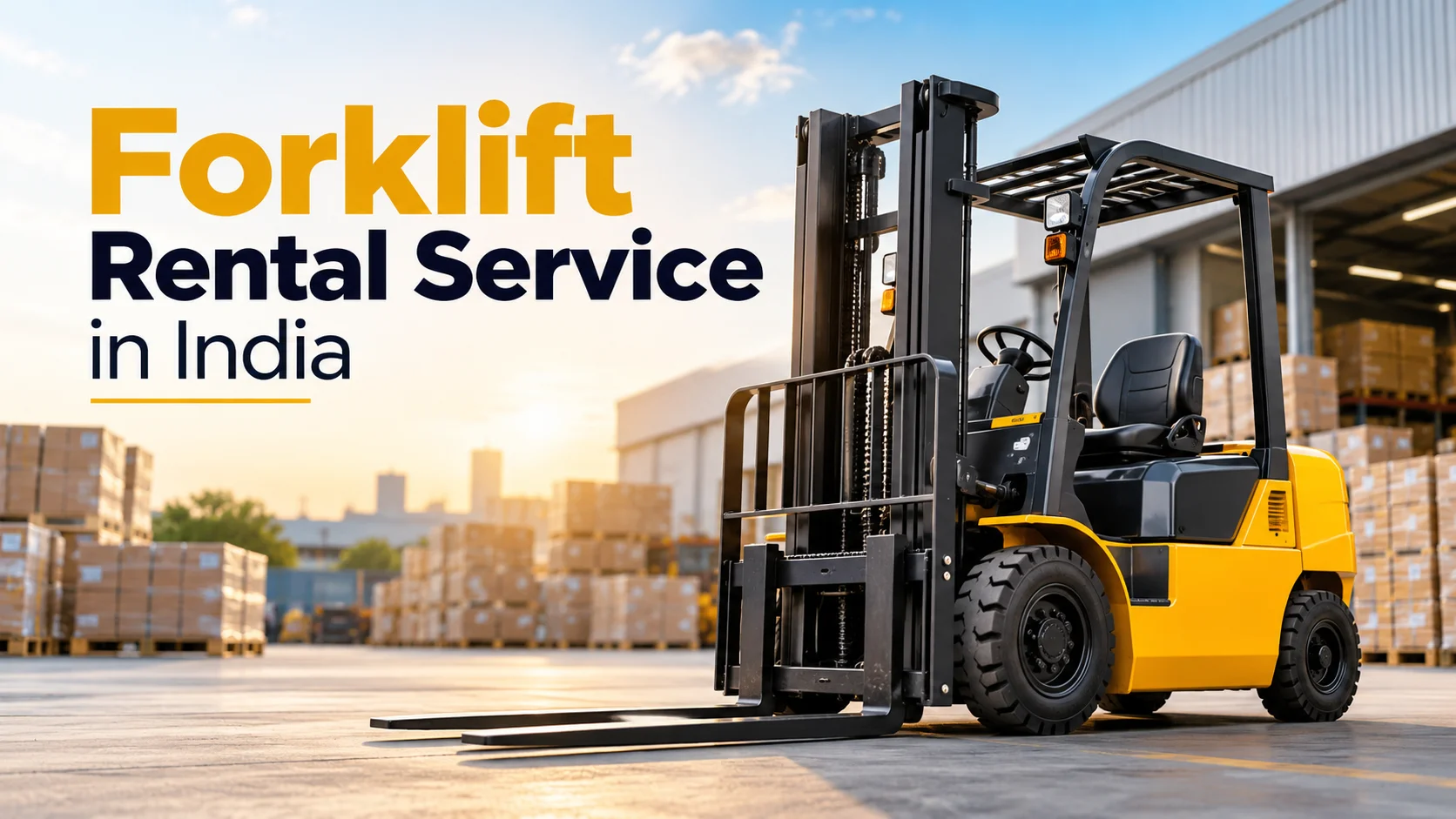
Managing heavy materials is a daily challenge for businesses involved in warehousing, manufacturing, construction, and logistics. From moving pallets and loading trucks to stacking goods in warehouses, the right equipment can make these tasks faster, safer, and more efficient.
However, purchasing a forklift is not always the best option, especially when equipment is needed for a limited period or when business requirements frequently change. This is why many businesses prefer a professional forklift rental service.
If you are planning to rent a forklift, you can access the equipment you need without making a large upfront investment. Whether you require a forklift for a short-term project, seasonal demand, or regular warehouse operations, renting allows you to choose a suitable machine based on your workload and budget.
In this guide, we will explain the benefits of forklift rental, the different types of forklifts available, factors affecting rental costs in India, and how to choose the right rental provider for your business.
A forklift rental service allows businesses to hire forklifts for a specific period instead of purchasing them. Depending on the provider, you may be able to rent equipment daily, weekly, monthly, or for a longer duration.
Forklifts are widely used to lift, transport, and stack heavy materials over short distances. They help businesses handle pallets, raw materials, finished products, machinery, and other goods with greater efficiency.
Many rental providers offer different forklift models to suit specific applications. Depending on the agreement, additional services such as equipment delivery, maintenance, technical support, and trained operators may also be available.
For businesses that want to manage material handling requirements without taking on the full responsibility of equipment ownership, forklift rental can be a practical solution.
Buying a forklift involves more than the purchase price. Businesses must also consider maintenance, repairs, storage, depreciation, and long-term operating expenses.
Here are some reasons why renting may be the right choice.
One of the biggest advantages of renting a forklift is that you do not need to spend a large amount on purchasing equipment.
This can be particularly helpful for startups, small businesses, contractors, and companies managing temporary projects. Instead of tying up capital in machinery, you can use your budget for other important business activities.
Not every business needs a forklift throughout the year. Some companies require additional equipment during peak seasons, while others need it only for specific projects.
When you rent a forklift, you can explore rental periods that match your operational requirements. Always check the minimum rental duration, availability, and contract conditions before booking.
Different jobs require different equipment. A warehouse handling palletised goods may need an electric forklift, while an outdoor construction project may require a suitable rough terrain forklift.
Rental services allow businesses to choose equipment according to their application rather than committing to a single machine.
Equipment breakdowns can interrupt operations and delay deliveries. Depending on the rental agreement, the provider may handle routine servicing, repairs, and technical assistance.
Before finalising your rental, confirm exactly what is included in the maintenance package and how breakdowns are managed.
Business requirements can change with new orders, warehouse expansion, seasonal demand, and project deadlines.
Forklift rental provides flexibility when your workload increases or decreases. It can help you obtain additional equipment when required without permanently expanding your owned fleet.
Owning a forklift comes with responsibilities such as maintenance planning, asset management, depreciation, and eventual replacement.
With a suitable rental agreement, some of these responsibilities may be handled by the rental provider, allowing your team to focus more on daily operations.
Before choosing a forklift rental service, it is important to understand which type of equipment suits your workplace. The right choice depends on the load weight, lifting height, floor conditions, available space, and working environment.
Electric forklifts are commonly used in indoor facilities where low noise and the absence of exhaust emissions at the point of use are important.
Best suited for:
Electric forklifts can be a good option for businesses looking for efficient indoor operations. Battery capacity, charging arrangements, and daily operating hours should be considered before renting.
Diesel forklifts are commonly used for outdoor operations and demanding industrial applications.
Best suited for:
Their suitability depends on load capacity, terrain, and operating conditions. Since diesel forklifts produce exhaust emissions, proper ventilation and environmental requirements must be considered.
LPG forklifts use liquefied petroleum gas and may be suitable for certain indoor-outdoor applications where ventilation and safety requirements are met.
Best suited for:
Before renting an LPG forklift, check fuel availability, ventilation, operating costs, and site safety requirements.
Reach trucks are designed primarily for warehouse operations involving high storage racks and relatively narrow aisles.
Best suited for:
If your warehouse has limited floor space, a reach truck may help improve storage efficiency. Make sure the equipment matches your aisle width, racking system, and lifting requirements.
Rough terrain forklifts are designed for suitable outdoor environments where surfaces may be uneven or unpaved.
Best suited for:
When choosing a rough terrain forklift, consider ground conditions, tyre type, load stability, and the maximum lifting capacity required.
Heavy-duty forklifts are used for applications that require lifting capacities beyond those of standard warehouse models.
Best suited for:
Always confirm the actual load weight, load centre, required lifting height, and attachment specifications before selecting heavy-duty equipment.
The cost to rent a forklift in India depends on several factors. There is no single price that applies to every forklift because equipment specifications, rental terms, and operating conditions vary.
Here are the main factors that influence forklift rental charges.
A forklift's lifting capacity plays an important role in determining rental costs. Specialised equipment and higher-capacity models may have different pricing from standard warehouse forklifts.
Daily, weekly, and monthly rental agreements may have different rates. If you need a forklift for an extended period, ask the provider whether a long-term rental arrangement is available.
The number of hours the forklift will be used each day can affect the rental quote. Multiple shifts or extended working hours may involve additional charges.
Some providers offer forklifts with trained operators, while others supply the equipment only. If you need an operator, confirm whether this service is included in the quotation.
The cost of transporting a forklift to your site depends on the distance, equipment size, and delivery arrangements. Ask whether delivery and collection charges are included.
Maintenance coverage varies between rental providers. Check whether routine servicing, breakdown repairs, spare parts, and replacement equipment are covered by the agreement.
To receive a quotation that matches your requirements, share the following details with the rental provider:
Comparing quotations based on the complete service package will help you understand the actual cost instead of focusing only on the advertised rental rate.
Forklifts play an important role in industries where heavy goods need to be moved, loaded, unloaded, or stored efficiently.
Warehouses use forklifts to move pallets, organise inventory, load trucks, and transport goods between storage and dispatch areas. Renting additional equipment can help manage higher workloads during busy periods.
Manufacturing facilities use forklifts to transport raw materials, components, work-in-progress inventory, and finished products across production areas.
Construction projects often involve moving building materials, equipment, and supplies. Renting suitable forklifts can provide additional material handling capacity for the duration of a project.
Retail distribution centres and e-commerce warehouses handle large quantities of inventory. Forklifts help move palletised goods, replenish storage locations, and support efficient order fulfilment.
Automotive plants and engineering companies use forklifts to handle components, machinery parts, metal products, and other industrial materials.
Distribution centres often experience fluctuating workloads. Forklift rental can help businesses obtain additional equipment during periods of increased demand without permanently expanding their fleet.
Choosing the right rental provider is just as important as choosing the equipment itself. A suitable provider can help you select a machine that meets your requirements and avoid unnecessary operational problems.
Make sure the provider has the required forklift model and lifting capacity available for your preferred dates.
Ask about maintenance history, safety inspections, equipment condition, and suitability for your intended application.
Understand how the provider handles breakdowns, repairs, scheduled maintenance, and replacement equipment when necessary.
Read the terms carefully, including rental duration, operating-hour limits, delivery charges, damage responsibilities, and payment conditions.
If an operator is required, confirm their training and competence. If your employees will operate the forklift, ensure they meet applicable training and authorisation requirements.
Choose equipment suitable for your site and application. Check that safety features are functioning and that the machine's rated capacity is appropriate for your loads.
A reliable rental provider should be willing to discuss your requirements and explain the equipment specifications before you make a decision.
Safety should always be a priority when handling heavy materials. Whether you own or rent a forklift, proper operation helps protect workers, inventory, and workplace infrastructure.
Follow these essential precautions:
Always follow the manufacturer's operating instructions and the safety procedures applicable to your workplace.
For small businesses, investing in industrial equipment can put pressure on cash flow. This is especially true when equipment is needed only occasionally or when demand changes throughout the year.
Choosing to rent a forklift can provide access to suitable material handling equipment without the initial expense of ownership.
For example, a small warehouse may require an additional forklift during a busy season, while a contractor may need one for a particular project. In such situations, renting can help meet immediate requirements without creating a long-term equipment commitment.
However, businesses with frequent, predictable equipment usage should compare rental charges against the total cost of purchasing and maintaining a forklift.
The best option is the one that meets your operational needs while keeping costs, productivity, and safety in balance.
A forklift rental service can be a practical solution for businesses that want to improve material handling without making a large upfront investment. From electric forklifts for indoor warehouses to diesel and rough terrain models for suitable outdoor applications, the right equipment can help your team move materials more efficiently.
Before you rent a forklift, consider your load requirements, operating conditions, rental duration, maintenance coverage, and overall budget. Taking the time to compare equipment and rental agreements can help you avoid unexpected costs and choose a solution that works for your business.
Whether you need a forklift for a short-term project, seasonal demand, or regular warehouse operations, selecting the right rental provider can make a meaningful difference to your daily workflow.
Looking for a forklift rental solution for your business? Contact a professional material handling equipment provider to discuss your requirements and request a customised quotation.
All Right Reserved by Geomatt
Designed by Mirackle Solution